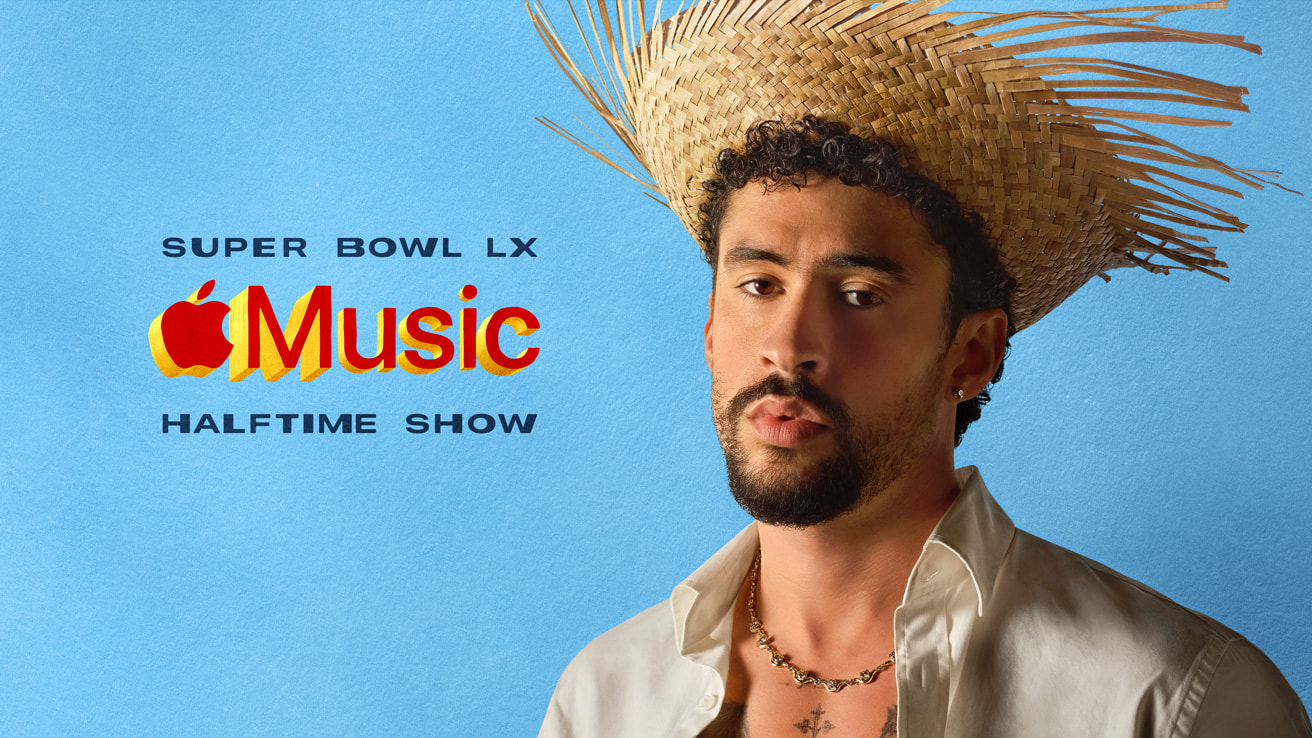

Benito Antonio Martínez Ocasio, a Puerto Rican artist who’s topped the charts as “Bad Bunny,”
performed on Superbowl Sunday, Feb. 8, for the halftime show held in Santa Clara, California. Besides a guest performance from Lady Gaga, the show was presented entirely in Spanish – making it the first of its kind in Superbowl Halftime show history.
The performance began with Bunny playing the top-streaming, “Tití Me Preguntó,” and the camera panning over artificial sugar cane fields tended to by dancers portraying jibaros, Puerto Rican country farmers. As he sang, Ocasio walked through the field, the camera leading him onward, and interacted with several sets which hold symbolic importance to Latino communities. The order of such symbols is as follows: a coconut stand, a nail salon, a piraguas (crushed-ice) cart, — with each flavoring bottle clad in a different flag — a taco stand, a boxing match, and a pawn shop. All representations are regarded as things of Hispanic “calles,” or streets. Their inclusion is not decorative, but rather a clear depiction of several important cultural elements.
Following this, was yet another ornate set – a pink and yellow casita. Atop it stood the headliner, and beneath him, on the house’s perimeter, there were several celebrities who were given a brief cameo in the performance. Most notable among the group was Cardi B, Pedro Pascal, Young Miko, Karol G, and Jessica Alba, all of whom were shown dancing and singing along. At the conclusion of Bunny’s singing of “Yo Perrero Sola,” he crashed through the roof of the house, interrupting a gathering. The singer proceeded to kick down the door of the casita and return to the opening set, where a run-down white truck now sat idly.
Marking the midway point of the 13-minute long show, the performer addresses the camera, or rather his viewers, directly. “Estoy aquí porque nunca, nunca dejé de creer en mí. Tú también deberías de creer en tí. Vales más de lo que piensas. Confía en mí,” Bad Bunny said. In English, this loosely translates to: “I’m here because I never stopped believing in myself. You should also believe in yourself. You’re worth more than you think. Trust me.”
Succeeding this message was a wedding, which unlike other sets, was real. Two Bad Bunny fans had requested his presence at their wedding, but as was unable to attend, he requested they marry during his show instead. They appear throughout the performance at several intervals, and after being legally married, can be seen dancing, kissing and smiling alongside the dancers.
After this, Lady Gaga performed an alternative version of her hit song, “Die with a Smile,” and accessorized it with salsa instrumentals and choreography. The guest performer herself was clad in the appropriate attire, including a light blue dress and red and white floral corsage. These colors were chosen purposefully, as they correspond to the original Puerto Rican flag, which utilizes a shade of blue lighter than their current one.
From this point forward, the performance continues just as vibrantly as the first half had. It includes titles such as “BAILE INoLVIDABLE” and “NUEVAYoL.” During the performance of the latter, an older woman is seen pouring Ocasio a shot. She was none other than Maria Antonio Clay, the owner of New York’s oldest Puerto Rican bar. This is one of many moments in which Bad Bunny makes an effort to share his platform with all who share his culture. He even does so for his younger-self, who is portrayed by a young boy. Bad Bunny interrupts said boy, who is found watching the Grammys, by handing him an award from the event. It commemorates not only his recent Grammy nomination and win, but the extensive journey he took to get to where he is today. The scene is truly a beautiful one.
Just as gut-wrenching was the last guest-performance of “LO QUE LE PASÓ A HAWAII” which was originally written by Bad Bunny himself and covered by fellow Puerto Rican artist, Ricky Martin. Paired with live acoustics, Martin’s vocals were phenomenal, and perfectly captured the essence of the song’s lyrics, which are based on the traumas of colonization.
“Together we are America,” read the football that Ocasio raised to the camera at his performance’s conclusion. Surrounding him as he did so were the flags of all of the American countries, as well as cheers from the crowd following his redefinition of America. According to Bad Bunny, America is as follows: “Chile, Argentina, Uruguay, Paraguay, Bolivia, Perú, Ecuador, Brazil, Colombia, Venezuela, Guyana, Panamá, Costa Rica, Nicaragua, Honduras, El Salvador, Guatemala, México, Cuba, República Dominicana, Jamaica, Antilla [not a country, but a generalization for all Caribbean islands], the United States, Canada, and Puerto Rico.” Unlike those of the States, many regard “North” and “South” America as one – believing that there are a total of six continents rather than seven. These people belive that the only reason such a division has been made in the States’ education system is because of systematic prejudice that has worked to separate predominantly Hispanic countries from the “American” culture. It was the sixtieth Superbowl Halftime performer’s intent, however, to let it be known that these countries are American ones.
Many have yet to legitimize Bad Bunny’s performance, arguing that he isn’t an American artist and that his songs don’t relate to the majority. To that, I rebut: Puerto Rico is an American territory and Bad Bunny was recently found, for the fourth time in his career, as the most-streamed artist on Spotify. It’s evident, therefore, that no sectionalization — essentially the creation of a “Northern” and “Southern” American continents — can work to remove cultures that have proven themselves a necessity to the American legacy. Identifying such is the heart of Bad Bunny’s performance. It will continue to stand as proof that we don’t have to speak the same language to love each other. Nosotros no necesitamos hablar el mismo lenguaje para amarnos.